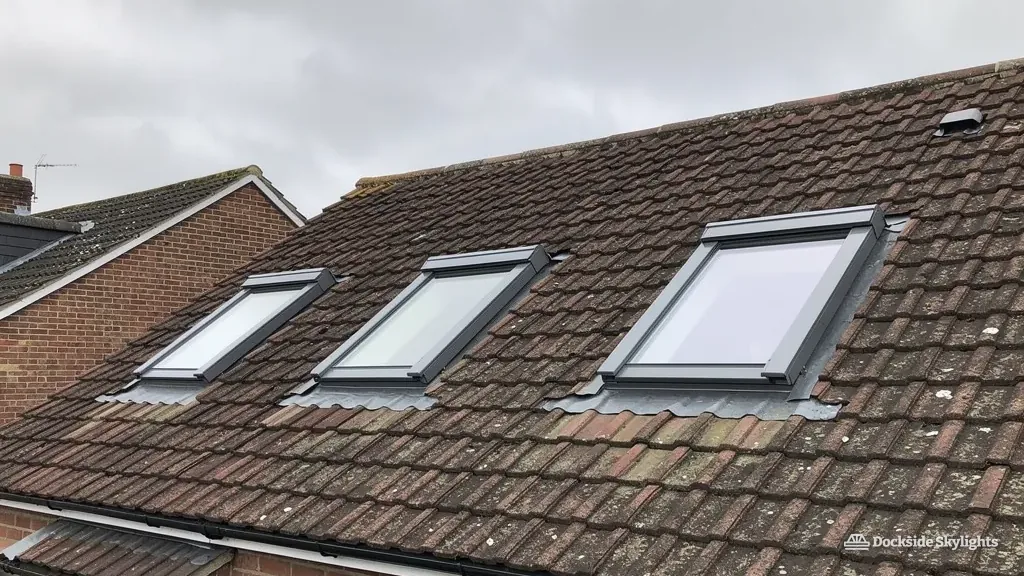
Adding a skylight and rooflight to the villas by the river mouth at New Brighton
Tall Victorian villas split into flats, sandstone-faced sea-front streets and brick terraces running back from the promenade give rooflight installation in New Brighton its character. Every skylight here sits in salt air blowing in off the mouth of the Mersey, so the metal, the seals and the fixings are chosen to survive it.
6.5 road miles north-west of Liverpool city centre
Where does the sea light fail to reach inside a New Brighton house?
- The villa stair wellInside a big villa off Wellington Road, where the staircase climbs past three landings and the only glass is a small window on the half-landing.
- The terrace box roomUpstairs in a Victorian terrace near Vale Park, in the box room over the stairs, which has one tiny window or none and always needs the lamp on.
- The converted attic flatUnder the roof of a former guest house on the streets behind the front, now cut into flats, where the attic rooms have sloping ceilings and borrowed light.
Villa stairwells, box rooms and attic flats
Skylight installation in New Brighton covers narrow brick terraces, tall Victorian villas, Edwardian bay-fronted semis and 1930s houses, and each kind of roof asks for a different fit.
- Larger Edwardian and inter-war rear extensions suit a lantern cut to the opening the extension actually has.
- Kitchens and porches added behind older houses get flat rooflights on a kerb with a proper upstand, because sea spray dries to salt up there.
- Rear slopes of terraces and semis take roof windows here, flashed against Liverpool Bay rain that sets hard on any north-west face.
- Replacement units for old villa stairwell rooflights where the glass has clouded or the aluminium frame has pitted from years of salt.
A Victorian resort built by the river mouth
The houses of New Brighton tell you how it began. It was laid out as a seaside resort in the nineteenth century, a short ferry hop from Liverpool, and the plots along the shore were meant for visitors. Large terraced and semi-detached buildings went up along and behind the promenade as guest houses and boarding houses, with several floors, steep stairs and generous attics. Many of those have since been cut into flats, and a flat changes what you can do to a roof before you pick up a tool.
Behind the front, the streets turn quieter. Victorian brick terraces fill many of the roads, with bay windows downstairs, narrow back yards and slate roofs. Up near Vale Park and along roads such as Wellington Road, the houses grow bigger again: tall villas with ornate brickwork, deep eaves and stairwells that rise through three storeys. These were built for merchants and shipping people who wanted sea air without leaving the Liverpool orbit, and the staircases show it.
Edwardian and inter-war building came next, as the resort spread inland towards Wallasey. Common here are Edwardian bay-fronted semis under tile, along with 1930s hipped-roof houses where the landing lies deep inside, away from any outside wall. In the later twentieth century small estates filled the gaps, and rear extensions of every age now cling to the backs of the older houses, often with flat roofs that were never given much light.
The conversions leave their own marks on the roofs. A guest house cut into flats often has several small dormers and skylights of different ages, fitted by different owners, and a few have been boarded over. Sorting out which openings are sound, which belong to which flat and which can be reused is part of the survey, and it is often quicker to replace an old unit in an existing opening than to cut a new one.
Out on the front itself stands Fort Perch Rock, a stone fort built on the rocks at the river mouth in the early nineteenth century. It is a landmark for the whole district, and it is a reminder that New Brighton lies open to the water on two sides, with the river to the east and the bay to the north.
Victorian houses were built tall, so lofts run roomy and conversions are common; the rear-slope roof window is usually the first addition. In the villas the roof is steeper and the rafters are heavier, which makes a clean opening easier. Terrace slopes are shorter with closer rafters, which means the unit must be chosen to fit the gap between them.
| Where | House | Good fit |
|---|---|---|
| The front | Former guest house, now flats | Roof window, after checking who owns the roof |
| Vale Park roads | Victorian villa | Stairwell rooflight, slim loft roof windows |
| Streets behind the front | Brick terrace | Roof window; sun tunnel for the landing |
| Towards Wallasey | Edwardian semi | Rear roof window in the loft, flat light over the back extension |
| Inter-war roads | 1930s house | Lantern on a rear extension |
Salt air, a north-west gale and the fixings that last
New Brighton stands where the Mersey meets Liverpool Bay, with the river to the east and open sea to the north. The prevailing wind is south-westerly, but westerly and north-westerly gales come in off the bay, and they carry fine spray as well as rain. A roof here dries out between showers more quickly than a sheltered inland one, but what it dries to is salt, and salt is hard on metal. Plain steel screws, thin aluminium and cheap sealant all give up early on this coast.
That shapes what we put on a roof. Frames and flashing are chosen for coastal exposure, fixings are stainless, and the sealant is applied to clean, dry surfaces and finished so it sheds water rather than holding it. A rooflight facing north-west takes the worst of the rain, so the head flashing and the side gutters get the most attention. A south-east slope on the same house is gentler, and we often steer a new window that way if the room allows it.
The covering matters just as much. Most older houses wear natural or Welsh-style slate, which cuts cleanly around a roof window and takes a neat soaker. Some terraces have been re-roofed in concrete tile, which needs a different flashing, one that sits over the profile of the tile and not into it. On flat extensions the covering is usually felt, sometimes single-ply, and a flat rooflight there needs a raised kerb tied properly into the new membrane.
Access is the other local detail. On the streets behind the front, terraced houses are close together, back lanes are narrow, and parked cars fill the road. A few roofs are reached best by fitting from inside, working up through the loft. Taller villas can call for a scaffold tower, and where that would sit on the pavement we plan it in advance so it does not hold up your neighbours.
Condensation is the quieter coastal problem. Damp sea air settles on cold glass, and a bathroom or stairwell with a fixed rooflight and no vent can stream on a winter morning. An opening unit, or a roof window with a trickle vent, is worth pricing beside the fixed option for any room that steams.
Wind also decides how the units open. A large opening roof window on an exposed slope near the front has to be restrained and robust, and we talk through the hinge and the stay before ordering. Flat roof units on a big gusty extension need a sound upstand so the lid is not lifted by suction at the edge.
- Whether the slope faces the open river mouth or is sheltered by the next row
- How far the existing frame or flashing has been pitted by salt
- What lies under the covering: boarding, felt or bare battens
- Whether the stair or lane lets a tower or ladder stand safely
- Who owns and maintains the roof if the house is now divided into flats
Wirral Council, flats and the paperwork for a new opening
New Brighton is in the Wirral, so the local planning authority is Wirral Council. Permitted development often covers a rooflight on a house, and what the planning rules allow is spelled out in the planning guide. What matters in this town is the housing. Many of the biggest buildings are flats, and the permitted development rights for rooflights do not cover flats or maisonettes. If your home is a flat in a converted guest house or villa, expect to ask the council first, and check your lease as well, because the roof usually belongs to the freeholder.
Parts of the older resort may sit inside conservation areas, and some individual buildings, Fort Perch Rock among them, are listed. We do not guess here. Check your street on the conservation area and Article 4 maps that Wirral Council posts at wirral.gov.uk before you commit to a product. How councils read a road-facing slope is covered in reading a roof slope that faces the street, and a window at the front of the house is covered separately. For a listed building the route is listed building consent, which Historic England explains at historicengland.org.uk.
Wirral Council's building control hears from us about every New Brighton job, and the Building Regulations guide explains the rules behind that notification.
Leasehold matters as much as planning for the many flats here. The roof is usually the freeholder's, the lease may reserve the right to alter it, and a management company may need to see drawings before it agrees. We can supply a clear description of the unit, its size and the flashing for you to send them, which saves a good deal of back and forth.
A New Brighton job follows a short sequence.
- Check the status of the building: house or flat, listed or not, inside a conservation area or not.
- Survey the roof so the unit, the flashing and the structure are agreed, and a price that names the unit is set.
- Fit the rooflight with the notification made and the work inspected as required.
Asked by New Brighton homeowners before the survey
My New Brighton house is a flat in an old guest house. Can I have a skylight put in?
Possibly, but not as of right. Permitted development rights for rooflights do not apply to flats, so you would normally apply to Wirral Council, and the freeholder has to agree to any change to the roof. Tell us the building and we will look at the roof when we survey, before you commit to anything.
Does salt spray from the river mouth shorten the life of a rooflight?
It can shorten the life of the wrong one. Salt attacks plain steel fixings, thin coatings and tired sealant first. We specify stainless fixings and frames suited to a coastal site, and we finish the flashing so it sheds water. That is what keeps a unit dry in an exposed spot like this.
Do you cover the roads around Vale Park and the front, or only the middle of town?
We cover them all. That takes in the villa roads near Vale Park, the streets behind the front, the Edwardian roads towards Wallasey and the inter-war houses. We take the roof as it is in each place, so give us the address and we will arrange the survey.
Will a rooflight in a Victorian villa stairwell need a scaffold?
Taller villas can call for a scaffold tower, and where it would stand on the pavement we plan it in advance so neighbours are not held up. The roof on those houses is steeper with heavier rafters, which makes a clean opening easier once the access is sorted.
Who checks the work on a rooflight we fit in New Brighton?
Wirral Council or a registered approver oversees it, and we make the notification ourselves whichever one that is, so you have no forms to complete.
Wallasey next door, the Wirral shore beyond
Next door is Wallasey, and the other towns along the Wirral shore and across the river are covered on separate town pages.
Free survey
Get a fixed quote in New Brighton
- No obligation
- We survey the roof before we price
- WhatsApp or phone, whichever suits
What happens next: we arrange a survey at a time that suits you, measure the roof and the room, then send a fixed written quote. Nothing is booked until you say yes.